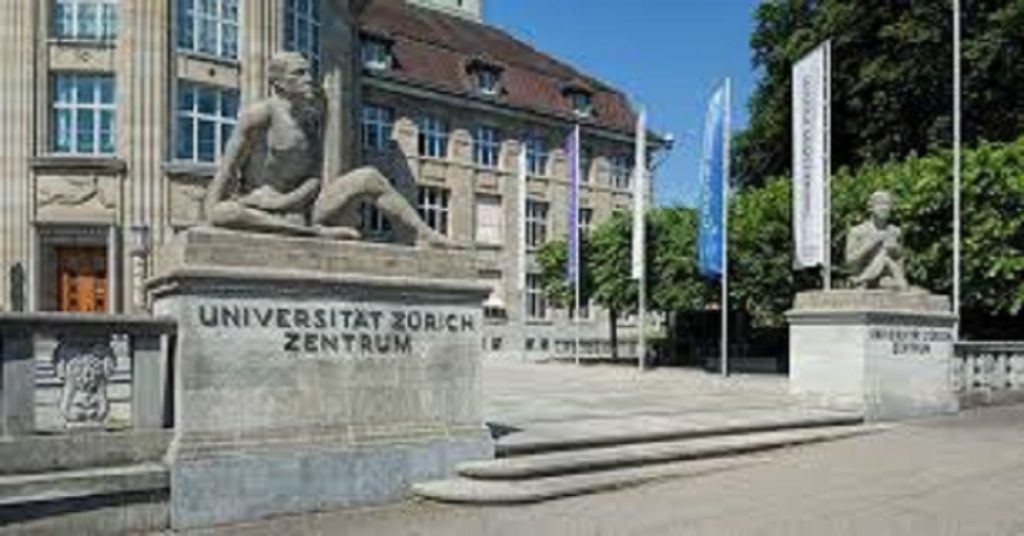
The Epidemiology and Geography group at the OHI focuses on assembling large databases of spatial data and developing methods to map infectious diseases in animals and humans. Their primary interest is on mapping antimicrobial resistance in animals raised for food in low- and middle-income countries, aiming to inform policymakers and reduce the global burden of antimicrobial resistance. The group also takes an interest in a range of other spatial modelling challenges at the intersection of human health, animal health, and ecology (e.g. mapping regions at risk of avian influenza outbreaks, mapping the geographic distribution of livestock, mapping the global distribution of bushmeat hunting, mapping accessibility to veterinary services). By addressing these issues, they try to advance our understanding of the spatial dimensions of the health of animals and humans.
The student will work under the mentorship of Professor Thomas Van Boeckel, who recently moved to the University of Zurich as one of three founding professors of the One Health Institute.
Your responsibilities
Antimicrobial Resistance (AMR) – the ability of microbes to evolve and resist treatment – is rising globally. This slow-moving crisis is driven by the overuse of drugs in humans, but also in animal production, which currently represents 73% of global antimicrobial consumption. Maps can play a key role in helping to prioritize surveillance efforts and allocate resources to curb animal-AMR.
In particular, this PhD project will focus on:
- ensemble forecasting from multiple geospatial models,
- expansion of geospatial models in the space-time dimensions,
- propagation of uncertainty in geospatial models, including positional uncertainty of surveys.
The project will leverage existing global datasets (resistancebank.org). The candidate will also bring their own original research questions to develop in the field of spatial epidemiology. In the Epidemiology & Geography Group, we deeply care about bringing together people from diverse educational backgrounds, geographical areas, and cultural origins to build complementarities within the team.
Your profile
We are looking for an enthusiastic and quantitatively minded scholar. The candidate must hold an Master’s degree in machine learning, microbiology, epidemiology or related, and have great oral and written communication skills in English.
The ideal candidate will have:
- experience with ensemble forecasting and a strong background in statistics.
- experience working with the programming language R or python, including the use of species distribution models and spatial analysis packages.
Although not mandatory, the following skills would be an asset:
- experience using high-performance computing clusters
- experience in conducting systematic literature reviews
- ability to read Mandarin Chinese, Spanish, Portuguese, or Arabic.
Information on your application
We will begin reviewing applications on January 5th 2026.
UZH offers excellent opportunities and strong support for career development. Salaries are internationally competitive. The initial contract is for one year and renewable up to four years of the project timeframe. We take gender balance and diversity seriously in our hiring decisions.
We look forward to receiving a single PDF file containing your CV and a one-page cover letter. In your letter, please describe your previous research experience, your aspirations, and your motivation for pursuing a PhD. Admission to the PhD position is contingent upon acceptance into one of the doctoral programs of the University of Zurich.
About the Author