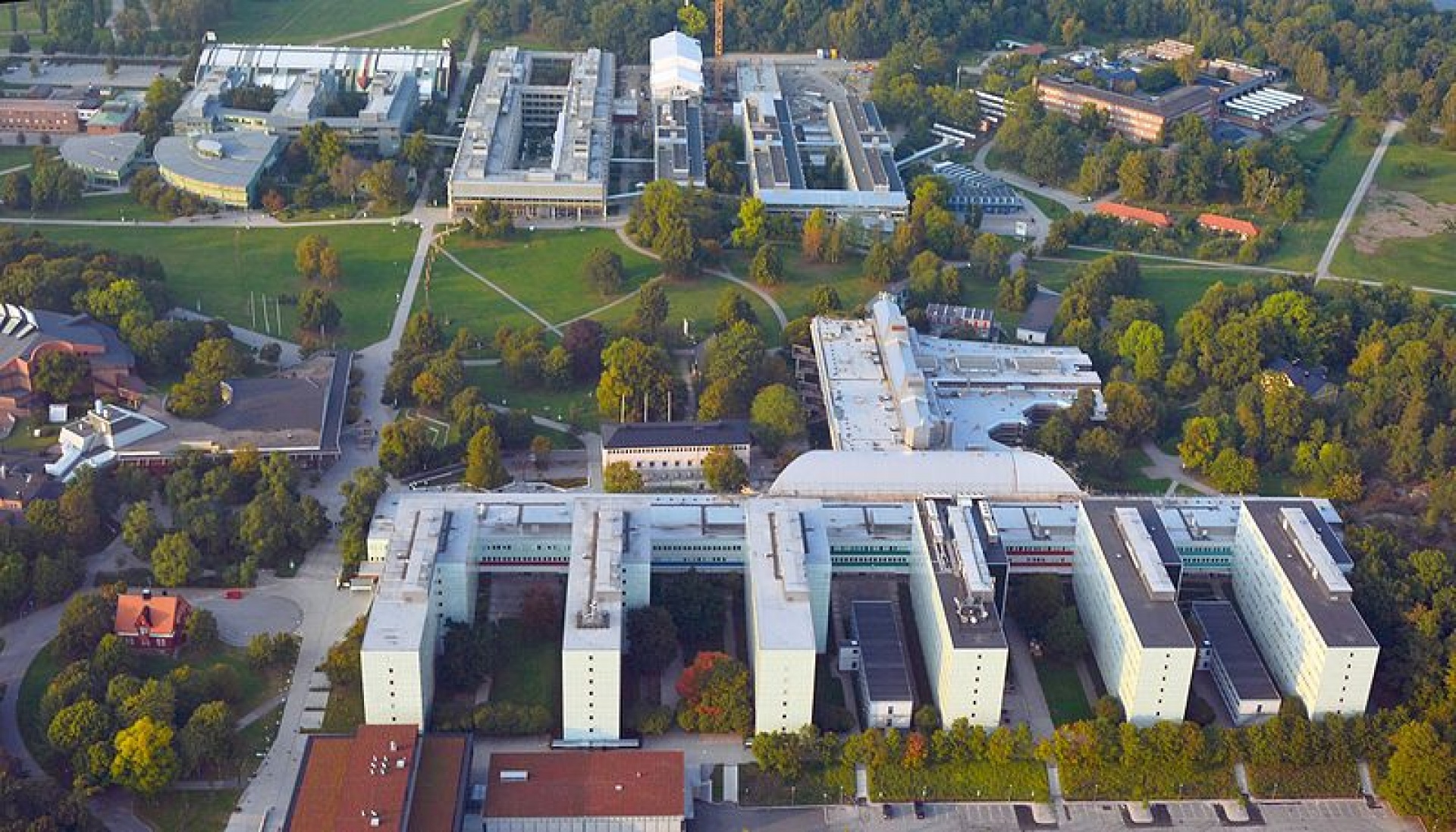
Stockholm Resilience Centre (SRC) is a research centre on resilience and sustainability science at Stockholm University. The Centre advances the scientific understanding of the complex, dynamic interactions of people and nature in the Biosphere; train the next generation of sustainability researchers and leaders; and engage in collaborations with change agents. It is a joint initiative between Stockholm University and the Beijer Institute of Ecological Economics at the Royal Swedish Academy of Sciences. The SRC currently employs around 160 members of staff. More information about us, please visit: Stockholm Resilience Centre (SRC).
The SRC aims to foster new generations of researchers and academic leaders through our Resilience Research School. The school equips students with a theoretical and practical foundation in Sustainability Science with a focus on resilience in social-ecological systems. Students are encouraged to develop new approaches that integrate methods and concepts from the social, natural and applied sciences. Emphasis is placed on developing student ability to define a problem, develop research methods, and communicate research findings within international scientific and science-policy discussions.
Project description
We seek an enthusiastic and committed PhD candidate to join the Formas-funded research project SOS-Cryo based at SRC, which seeks to understand and explore ways to address the increasing Earth resilience risks driven by the global deterioration in cryosphere functioning.
The cryosphere, such as mountain glaciers, ice sheets, permafrost, snow cover, and sea ice, critically regulates Earth system dynamics. However, despite rapid loss and degradation in cryosphere functions caused by anthropogenic climate change, there is still no systematic assessment of how cryosphere changes impact Earth resilience, i.e., the Earth’s capacity to maintain habitable conditions. The planetary boundaries (PB) framework is the most well-established framework for assessing Earth resilience and demarcating a ‘safe operating space’ (SOS) for human development, but does not yet explicitly consider the cryosphere.
The PhD candidate will address this urgent knowledge gap by investigating how critical cryosphere functions for Earth resilience can be maintained. The work involves (1) identifying and quantifying key cryosphere functions and features associated with habitable Earth conditions, (2) detecting the resilience status of cryosphere functions and their influencing factors using multivariate early warning indicators and machine learning models, (3) determining the current and future transgressions of a cryosphere SOS, and (4) proposing potential transformative pathways for safeguarding cryosphere resilience in consultation with both academic and nonacademic experts and users. The PhD candidate will perform analyses on observation-based and model output data, conduct cryosphere-Earth system modeling, carry out case studies in the Arctic and the High Mountain Asia regions, and organize scientific and stakeholder workshops. The SOS-Cryo project is expected to provide key insights for a safe and just governance of the cryosphere.
The SOS-Cryo project is a collaboration between researchers at Stockholm Resilience Centre at Stockholm University, the international research organization Earth Commission, the Potsdam Institute for Climate Impact Research, the Bolin Centre for Climate Research, and Tsinghua University. The PhD candidate will be supervised by Assoc. prof Lan Wang-Erlandsson (SRC) and Dr. Bo Su (SRC).
Qualification requirements
In order to be admitted to postgraduate education, the applicant must have the general and specific entry requirements. The qualification requirements must be met by the time the applicant is admitted to the PhD program at the Stockholm Resilience Centre.
You meet general entry requirements if you have completed a second-cycle degree, or completed courses equivalent to at least 240 higher education credits, of which 60 credits must be in the second cycle, or have otherwise acquired equivalent knowledge in Sweden or elsewhere.
Specific entry requirements for admission to postgraduate studies in Sustainability Science are that the applicant has a total of at least 30 credits, or equivalent, at advanced level in Natural Science, as well as a thesis of at least 30 credits at advanced level in a relevant subject, or equivalent knowledge.
Selection
The selection among the eligible candidates will be based on their capacity to benefit from the training. The following criteria will be used to assess this capacity:
Subject knowledge relevant to the research task, for example, cryosphere science, Earth system science, and sustainability science. Quantitative methods skills, such as large-scale geospatial data analyses, cryosphere and Earth system modeling, machine learning (including deep learning), and programming (e.g., Python, R) Analytical ability as demonstrated by, e.g., research article(s), or degree project thesis Ability to work in interdisciplinary teams Fluency in English, and skilled in written and oral communication
In addition, any of the following would be desirable:
Experience with both quantitative and qualitative methods Experience in field studies in cryosphere-dominated regions. Language skills relevant for an Arctic and/or High Mountain Asia field study.
Admission Regulations for Doctoral Studies at Stockholm University.
About the employment
We offer a fixed-term employment as a doctoral student according to Chapter 5 of the Higher Education Ordinance (1993:100). The period of employment may not be longer than what corresponds to full-time doctoral education for four years. As a doctoral student, you should primarily devote yourself to your own doctoral education, but the employment may include work with education, research and administration to a limited extent (maximum 20 %).
A new employment as a doctoral student is for a maximum of one year, the employment is then renewed for a maximum of two years at a time.
Stockholm University strives to be a workplace free from discrimination and with equal opportunities for all.
Contact
For more information, about the PhD programme or Sustainability Science at Stockholm Resilience Centre, please contact the Director of PhD programme Victor Galaz, phone: +46 8 674 70 83, victor.galaz@su.se or Head of Subject, Professor Örjan Bodin, phone: +46 8 674 76 71, orjan.bodin@su.se.
For more information about the project or the position, please contact Lan Wang-Erlandsson, lan.wang@su.se, or Bo Su bo.su@su.se.
Application
Apply for the PhD student position at Stockholm University’s recruitment system. Attach a personal letter and CV as well as the attachments requested in the application form. It is the responsibility of the applicant to ensure that the application is complete in accordance with the instructions in the job advertisement, and that it is submitted before the deadline.
The instructions for applicants are available at: How to apply for a position.
Stockholm University contributes to the development of sustainable democratic society through knowledge, enlightenment and the pursuit of truth.
| Type of employment | Temporary position |
|---|---|
| Contract type | Full time |
| Salary | Fixed salary |
| Number of positions | 1 |
| Full-time equivalent | 100 % |
| City | Stockholm |
| County | Stockholms län |
| Country | Sweden |
| Reference number | SU FV-4216-25 |
| Union representative | ST/OFR, st@st.su.seSaco-S, saco@saco.su.seSeko, sekodirekt@seko.se |
| Published | 05.Jan.2026 |
| Last application date | 25.Jan.2026 |
About the Author